

Stone Crusher Buying Guide: Key Technical Parameters
Ordering a stone crusher is not simply a matter of choosing a machine with the highest capacity or the lowest price. For mining, quarrying, and aggregate projects, a crusher is a core production asset that will operate continuously under heavy load for many years. Its technical suitability directly determines production stability, operating cost, wear consumption, and overall project profitability.
Many project failures are not caused by poor equipment quality, but by incorrect technical assumptions made during the selection stage. A crusher that is not properly matched to the material characteristics, feed conditions, and process requirements will inevitably underperform—no matter how reputable the brand may be.
This article explains the key technical parameters that must be carefully confirmed before buying a stone crusher, helping project owners make informed, engineering-based decisions rather than price-driven mistakes.

1. Material Characteristics: The Starting Point of Crusher Selection
Every crusher selection process should begin with a clear and realistic understanding of the material to be processed. Stone crushers are highly sensitive to material properties, and even small differences in hardness or abrasiveness can significantly impact performance and wear life.
The type of material—such as limestone, granite, basalt, iron ore, or gold-bearing rock—determines the basic crushing principle required. Hard and abrasive materials demand compression crushing, while softer materials allow for impact-based solutions. Beyond material type, parameters such as silica content, compressive strength, and abrasiveness index are critical in predicting liner wear and energy consumption.
Moisture content and clay presence are equally important but often underestimated. Materials containing clay or excessive moisture tend to cause blockages, reduced throughput, and unstable operation. If these conditions are not considered during crusher selection, frequent downtime and reduced efficiency become unavoidable.
2. Feed Size: More Than Just a Maximum Number
Feed size is one of the most commonly misunderstood technical parameters. Buyers often focus only on the maximum feed size listed in the crusher specification, assuming this is sufficient for selection. In reality, both the maximum size and the feed size distribution must be carefully evaluated.
If the actual feed occasionally exceeds the crusher’s design limit, mechanical stress increases sharply, leading to liner damage, bearing overload, and unexpected shutdowns. Even when the maximum size is within limits, a poorly graded feed with excessive fines or oversized lumps can reduce crusher efficiency and output stability.
Understanding how the material is produced—through blasting, ripping, or excavation—is essential. A well-designed crushing plant assumes realistic feed conditions, not ideal ones.

3. Required Capacity: Rated Output vs Real Production
Crusher capacity figures published by manufacturers are typically based on standardized test conditions. Actual production in the field is influenced by multiple variables, including material hardness, moisture, feed consistency, and operator experience.
For this reason, capacity should never be selected at the exact target output. A safety margin is essential. Designing the crusher to operate continuously at its maximum rated capacity often results in accelerated wear, higher energy consumption, and frequent maintenance interruptions.
In professional plant design, crushers are selected to operate comfortably within their performance envelope, ensuring long-term stability rather than short-term peak output.
4. Crushing Ratio and Product Size Requirements
The required crushing ratio determines how many crushing stages are needed and which crusher types are appropriate. Attempting to achieve excessive size reduction in a single stage may appear economical, but it usually leads to poor product shape, increased liner wear, and unstable operation.
Final product size requirements also influence crusher configuration. Projects supplying aggregates for concrete or asphalt often require well-shaped, cubical particles, while mining operations may prioritize throughput over shape. These differences directly affect the choice between cone crushers, impact crushers, and chamber designs.
A crusher should not be selected in isolation; its role within the entire crushing circuit must be clearly defined.
5. Crusher Type and Chamber Configuration
The crushing principle—compression or impact—is a fundamental technical decision. Jaw and cone crushers apply compressive force and are better suited for hard, abrasive stone, while impact crushers use high-speed impact to achieve higher reduction ratios for softer materials.
Within each crusher type, chamber configuration plays a decisive role. Different chamber profiles influence throughput, product grading, and wear distribution. A mismatched chamber can reduce capacity even if the crusher itself is correctly sized.
Professional suppliers select chamber configurations based on material tests and process requirements, not generic assumptions.
6. Power Requirements and Drive System
Power configuration is a critical yet frequently underestimated parameter. Insufficient motor power leads to frequent stalling and unstable operation, while excessive power increases capital and energy costs without improving productivity.
In regions with unstable grid power or remote project locations, power supply conditions must be carefully evaluated. Diesel-driven or hybrid systems may offer higher reliability and operational flexibility than purely electric solutions.
Matching the crusher’s drive system to local power conditions is essential for maintaining consistent production.
7. Wear Parts and Long-Term Operating Cost
Wear parts represent one of the largest ongoing costs in crushing operations. The selection of liner materials must consider material abrasiveness, operating conditions, and desired product shape.
A crusher with low initial price but high wear consumption can quickly become uneconomical. Equally important is the availability of spare parts. Long lead times for liners and critical components can cause costly production stoppages.
From a life-cycle cost perspective, wear parts strategy is just as important as the crusher itself.
8. Automation, Control, and Operational Safety
Modern stone crushers increasingly incorporate automation features that protect the machine and improve production consistency. Hydraulic adjustment systems, overload protection, and tramp iron release mechanisms reduce operator dependency and prevent mechanical damage.
Safety systems are not optional. Easy access for maintenance, emergency stop functions, and proper guarding are essential for protecting personnel and ensuring compliance with international safety standards.
9. Installation, Transport, and Site Constraints
Technical suitability also includes practical considerations such as transport dimensions, installation requirements, and site layout. Oversized equipment may increase logistics costs or require complex civil works.
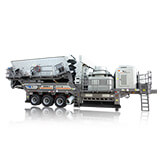
The decision between stationary and mobile crushers should be based on project duration, relocation frequency, and site infrastructure. A technically perfect crusher that cannot be installed efficiently often becomes a financial burden.

10. Integration with the Entire Crushing Plant
A stone crusher is only one component of a complete processing system. Its performance depends heavily on feeders, screens, conveyors, and downstream equipment.
Bottlenecks frequently occur when crushers are selected independently, without considering system balance. Proper integration ensures smooth material flow and maximizes overall plant efficiency.
Technical Confirmation Protects Your Investment
Confirming key technical parameters before ordering a stone crusher is not a delay—it is a safeguard. A crusher correctly matched to material properties, feed conditions, capacity requirements, and site constraints will operate more reliably, cost less per ton, and deliver predictable returns over its service life.
For mining and aggregate projects, the most successful investments are made when equipment selection is driven by engineering analysis rather than brochure specifications or initial price alone.