

How Much Do Stone Crushers Cost in the Philippines?
Stone crusher machine prices in the Philippines range from under ₱1.0 million for small-scale jaw crusher to over ₱26 million for large-capacity track-mounted mobile plants. The right investment depends on three core variables: required production volume, target material type, and total cost of ownership over the equipment's service life.
This article provides a detailed price analysis of stone crusher machines available in the Philippine market, covering equipment types, key pricing factors, total cost of ownership, and practical procurement strategies.

Common Stone Crusher Types Used in the Philippines
Diverse stone crushers are widely used across the Philippines to match varied raw materials, production scales and scattered island-based projects. They are divided by working principle, mobility and application stages, with jaw crushers, cone crushers, impact crushers, hammer crushers and mobile integrated units being the mainstream choices. Each model has fixed applicable scenarios for construction aggregates, ore processing and waste recycling.
- Jaw Crusher: The most popular primary crushing equipment. It features sturdy compression structure, strong adaptability to hard rocks such as granite, basalt and river pebbles. Widely applied in large quarries, mines and major infrastructure projects across Luzon, Visayas and Mindanao.
- Cone Crusher: Specialized for secondary and tertiary crushing. It adopts laminated crushing technology, delivering uniform aggregate particle size and low wear loss. Ideal for high-hardness, highly abrasive raw materials and high-standard concrete aggregate production.
- Impact Crusher: Mainly used for shaping medium-soft materials like limestone and construction waste. It produces cubic aggregates that meet Philippine construction standards, commonly seen in road and building material projects.
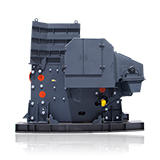
- Hammer Crusher: Simple structure and low entry cost, suitable for small rural projects and low-abrasion stone processing. It has higher wear part consumption under harsh working conditions.
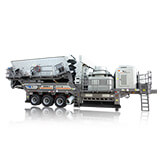
- Mobile Crusher (Tracked & Wheeled): An all-in-one unit integrating feeding, crushing and screening. Requiring no concrete foundation, it is the preferred option for cross-island transportation and frequently relocated temporary projects.
Key Factors Affecting Stone Crusher Prices in the Philippines
Stone crusher prices in the Philippines are affected by multiple intertwined factors. Equipment type, production capacity and brand form the basic price gap, while power configuration, tropical adaptive design, import taxes and inter-island logistics further raise comprehensive costs. New and second-hand machines also have obvious price differences.
- Equipment Type & Capacity: Under the same brand, larger hourly output means higher manufacturing cost. Mobile units are more expensive than stationary ones of equal capacity; cone crushers cost more than jaw and hammer crushers due to complex hydraulic systems.
- Brand & Origin: International premium brands are 30%–50% higher in price with superior stability. Chinese mainstream brands occupy the largest market share with balanced cost performance. Local assembled equipment is 10%–20% cheaper but has unstable quality.
- Power & Tropical Configuration: Pure electric models are the lowest-priced. Diesel-electric hybrid units, which adapt to unstable power on remote islands, see an 8%–14% price increase. Anti-corrosion, dust-proof and heat dissipation designs for tropical climates add another 5%–9% to the cost.
- Import Tax & Logistics: The basic import duty for crushing machines is 10%–12%, plus 12% VAT. Luzon has the lowest freight; transporting equipment to Visayas and Mindanao increases logistics costs by 12%–28%.
- New vs. Second-hand Equipment: Reconditioned crushers are 35%–55% cheaper than new ones, but they lack official after-sales service and carry hidden risks of aging parts.
- Environmental Accessories: To comply with DENR regulations, supporting facilities such as dust collectors and noise barriers will increase the overall investment by 6%–10%.
Stone Crusher Price Ranges in the Philippines
Below are the mainstream price ranges of various crushers in 2026, quoted in US Dollar (USD) and Philippine Peso (PHP). All prices are FOB quotations, excluding freight, tax, installation and after-sales fees. Prices are classified by capacity and mobility for easy comparison.
- Small-Scale Jaw Crushers (50-80 TPH): These cost around PHP 1.3–1.8 million (USD 22,000–32,000). They are robust primary crushing units, ideal for small local contractors, family-run quarries and low-volume rural construction projects across remote islands.
- Medium-Scale Jaw Crushers (100-250 TPH): Priced between PHP 4.8–6.5 million (USD 85,000–118,000). Built for heavy-duty operation, these machines are the standard choice for mid-sized quarries and established construction companies with stable production demands.
- Stationary Hydraulic Cone Crushers (100-150 TPH): Expect prices from PHP 7.2–9.5 million (USD 128,000–170,000). Equipped with sophisticated hydraulic protection systems, precision liners and laminated crushing technology, they are engineered for hard rock like granite and basalt. Their advanced structure leads to higher procurement and routine maintenance costs compared to jaw crushers.
- Mobile Wheel Crushers (80-120 TPH): These range from PHP 12.5–17 million (USD 225,000–305,000). Featuring flexible wheeled chassis, they are easy to transport between adjacent job sites and widely adopted for short-term infrastructure projects.
- Mobile Crawler Crushers (80-120 TPH): These start at PHP 19.5–26 million (USD 355,000–470,000). With excellent off-road performance, crawler models adapt to rough terrain and frequent cross-island transportation, favored by large engineering teams.
- Impact Crushers (60-180 TPH): These typically cost PHP 2.2–4.5 million (USD 39,000–80,000). They excel at shaping limestone and soft aggregates; prices fluctuate based on rotor design, wear-resistant blow bars and maximum processing capacity.
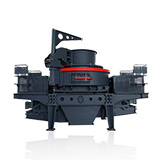
- Vertical Shaft Impact Sand Making Machines (50-150 TPH): Units with standard configurations cost PHP 3.0–5.2 million (USD 53,000–93,000). Models adopting rock-on-rock crushing structure and anti-abrasion upgrades fall at the higher end of this price bracket.
- Small Hammer Crushers (10-50 TPH): These cost approximately PHP 1.0–1.5 million (USD 18,000–27,000). Featuring simple structure and low upfront investment, they are popular for minor stone processing and temporary rural works, though wear parts need regular replacement.
- Key Wear Parts & Auxiliary Equipment: A full set of high manganese steel liners for jaw and cone crushers costs PHP 420,000–1.8 million (USD 750–3,200). Vibrating screens, belt conveyors and feeders are sold separately with prices determined by specifications and size.
Overall prices vary based on equipment brand, tropical adaptive upgrades, local logistics fees and additional attachments such as integrated screening or conveying systems. Mainstream Chinese manufacturers offer competitive ex-factory prices, while European and American premium brands command higher quotes due to advanced automation, longer lead times and international shipping costs.
Full Lifecycle Total Cost of Ownership (TCO) Analysis
Philippine buyers must evaluate comprehensive costs instead of focusing merely on upfront purchase price. The TCO composition of a typical crushing project is as follows:
- 1. Initial procurement cost: 58%–68% of TCO (main equipment and standard accessories)
- 2. Tax, customs & logistics cost: 10%–20% (varies by island and import method)
- 3. Civil engineering & installation cost: 4%–11% (stationary plants require high foundation costs; mobile plants are nearly free of civil works)
- 4. Fuel & power cost: 11%–19% (the largest recurring expenditure for diesel-driven equipment in remote areas)
- 5. Wear parts & daily maintenance cost: 8%–16% (Mn18 high manganese liners can effectively reduce replacement frequency and comprehensive wear cost)
How to Choose a Cost-Effective Stone Crusher
Cost-effective selection cannot solely rely on low upfront prices. Buyers need to match equipment with project demands, local operating environment and long-term operation plans, and comprehensively evaluate total cost of ownership (TCO) to avoid hidden losses in the later stage.
- Match Machine with Raw Material & Output: Use jaw crushers for hard granite and basalt; choose impact crushers for limestone and construction waste. Select corresponding capacity models according to daily output to avoid overcapacity or insufficient production.
- Select Mobility Based on Project Cycle: Choose mobile crushers for short-term projects and frequently relocated island sites; pick stationary plants for large, long-term fixed quarries.
- Prioritize Environmental & Power Adaptation: For areas outside central Luzon, diesel-electric hybrid power and tropical anti-corrosion & moisture-proof configurations are mandatory to reduce failure rates.
- Focus on After-sales & Spare Parts Supply: Give priority to brands with local warehouses and service teams in Manila and Cebu to shorten the lead time of wear parts and on-site maintenance.
- Calculate Full Lifecycle Cost: Do not ignore recurring expenses such as fuel, electricity and wear parts. Mn18 high manganese liners can effectively reduce long-term replacement costs.
- Comply with Local Policies: Ensure the equipment has complete certification to pass DENR environmental inspection and customs clearance.
Stone crusher prices in the Philippines range from PHP 1.0 million for entry-level small jaw crushers to over PHP 26 million for high-end tracked mobile crushing plants. To secure the best return on investment, buyers need to fully evaluate equipment performance, production capacity, technical configurations and after-sales support. No matter you choose cost-efficient stationary machines or flexible mobile plants, in-depth market research and reliable supplier cooperation will help you select the most suitable crushing solution for your projects.