

Mobile vs Stationary Crushing Plant for C&D Waste Recycling
Global sustainable construction policies and rising landfill fees have pushed construction and demolition (C&D) waste recycling into a core profit segment for demolition contractors, aggregate producers and waste management enterprises.
The core equipment for turning mixed concrete, brick, asphalt and rebar debris into saleable recycled aggregates falls into two mainstream categories: mobile integrated crushing plants and stationary fixed recycling lines. Each system carries distinct strengths, limitations, cost structures and applicable scenarios. There is no universal “superior” solution; the optimal choice depends on project scale, site conditions, operation cycle and long-term return on investment (ROI).
This professional guide systematically compares mobile and stationary construction waste crushers, outlines core selection criteria, and delivers actionable advice for global buyers in urban renovation, road demolition and centralized waste recycling industries.
1. Key Features of Mobile & Stationary Plants for C&D Waste Recycling
1.1 Mobile Construction Waste Crushing Plant
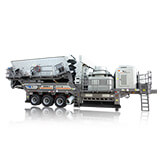
Mobile crushers adopt track or wheeled self-propelled chassis, integrating feeders, primary/secondary crushers, vibrating screens, magnetic separators and closed conveyors into one modular unit. Most models support dual diesel-electric power supply, with complete dust suppression and noise reduction systems pre-installed. No concrete foundation or factory workshop is required. After flatting the ground, the whole unit can start operation within 1–4 hours upon arrival at demolition sites. Two mainstream types exist: wheeled mobile units for highway transportation and tracked mobile crushers adapting to rugged, narrow urban construction zones. Single-line processing capacity normally ranges from 80 to 300 TPH.

1.2 Stationary Construction Waste Recycling Line
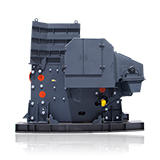
Stationary crushers are decentralized fixed production layout with independent crushers, multi-layer screening equipment, metal separation units, dust removal towers and finished material stockpiles, all fixed on reinforced concrete foundations. It supports multi-stage combined crushing, fine sand making and deep impurity removal (air sorting, washing). Stationary lines deliver stable high throughput from 200 TPH up to over 800 TPH, designed for permanent centralized recycling yards with consistent long-term waste supply. Civil engineering, power distribution workshop and enclosure noise barriers are mandatory supporting facilities before commissioning.

2. Mobile vs Stationary Crushing Plant: Full Comparison for Construction Waste Recycling
2.1 Mobility & Site Adaptability
Mobile Crushers
- Core merit: Self-moving design allows direct access to scattered demolition sites, inner-city renovation zones and remote road reconstruction projects; eliminates high truck haulage fees for raw waste and finished aggregates.
- Space advantage: Compact integrated structure occupies only 1/3 floor space of equivalent stationary lines, suitable for dense downtown areas with strict land limits.
- Drawback: Restricted by chassis load, unable to match ultra-large multi-stage processing combinations.
Stationary Crushers
- Core merit: Fixed centralized layout for continuous mass processing, flexible expansion of sorting and sand-making equipment.
- Limitation: Waste materials must be transported to the fixed plant by heavy trucks, generating high fuel, labor and landfill transit costs; relocation involves full disassembly, foundation demolition and re-installation, taking months and incurring massive extra expenditure.
2.2 Upfront Investment & Civil Engineering Costs
Mobile Crushers
- No foundation, factory or enclosure construction expenses; only simple site leveling is needed.
- Higher unit equipment price due to chassis, walking hydraulic system and integrated control modules.
- Total initial cost covers machine, dust removal and magnetic separation only, no long-term civil depreciation loss.
Stationary Crushers
- Lower unit price for individual crushers, yet heavy additional costs for concrete foundations, steel workshops, power transformation stations and environmental enclosure facilities. A 300 TPH stationary plant usually requires civil investment accounting for 15–25% of total project budget.
- Civil structures have zero residual value once the project ends, increasing overall asset loss.
2.3 Production Capacity & Aggregate Quality Control
Mobile Crushers
- Single unit capacity capped at 300 TPH; limited multi-stage matching capacity.
- Standard crushing configurations meet basic road base aggregate standards; advanced fine shaping and impurity removal modules are hard to integrate, restricting high-value recycled sand output.
Stationary Crushers
- Scalable capacity up to 800+ TPH, supporting jaw-impact-cone three-stage crushing, air separation and aggregate washing.
- Precise gradation adjustment delivers cubic recycled aggregates compliant with high-grade concrete raw material standards, raising finished product selling prices by 15–30%.
2.4 Installation, Commissioning & Relocation Efficiency
Mobile Crushers
- Full pre-assembly at factory; on-site commissioning finishes within 1–2 days. Relocation between job sites takes less than 48 hours for re-starting production.
Stationary Crushers
- Civil construction and equipment installation cycle lasts 1–3 months for medium-large lines. Moving the whole production system requires complete disassembly, new foundation pouring and re-calibration, with downtime exceeding 1 month.
2.5 Long-Term Maintenance & Asset Residual Value
Mobile Crushers
- Chassis and walking parts generate extra wear from frequent transfers; routine maintenance focuses on mobile hydraulic systems besides crushing cavities.
- High residual value: Entire units can be resold or transferred to other projects after one contract ends, with strong second-hand market liquidity.
Stationary Crushers
- Stable fixed installation reduces equipment vibration and wear, lowering daily maintenance frequency for core crushing components.
- Only standalone crushers retain residual value; concrete foundations are abandoned upon project closure, dragging down total asset recovery rate.
2.6 Environmental Compliance Performance
Mobile Crushers
- Built-in small dust collectors and noise silencers meet temporary urban construction emission standards; difficult to install large-scale continuous waste gas treatment systems for long-term high-intensity operation.
Stationary Crushers
- Compatible with centralized bag dust removal, closed material conveying and full noise insulation walls, easily passing strict long-term environmental audits for formal recycling yards.
3. Key Selection Criteria for C&D Waste Crushing Equipment
Factor 1: Project Operation Cycle & Waste Distribution
- Choose mobile crushers for short-term contracts (6–24 months), scattered demolition sites, multi-region road renovation and temporary urban renewal projects. On-site crushing cuts material transportation expenditure by 40–60% and avoids cross-city waste transit permits.
- Select stationary lines for permanent licensed C&D recycling yards with stable long-term waste supply over 3 years. Centralized mass processing maximizes unit ton profit margins.
Factor 2: Daily Processing Volume & Finished Aggregate Standard
- Daily output below 2,000 tons and demand only for low-grade road base aggregates: wheeled or tracked mobile units suffice.
- Daily output above 3,000 tons with requirements for high-quality recycled sand and concrete-grade aggregate: customized stationary multi-stage production lines are mandatory.
Factor 3: Site Land Condition & Geographic Location
- Narrow inner-city sites, mountainous road zones or islands with limited land resources: mobile compact plants are the only feasible solution.
- Sufficient industrial land in suburban areas allowing permanent factory construction: stationary lines deliver better long-term economic returns.
Factor 4: Budget Structure & Total Cost of Ownership (TCO)
- Limited initial capital, unwilling to bear civil construction investment: mobile crushers eliminate foundation and workshop costs despite higher machine unit prices.
- Sufficient overall investment budget pursuing 5–10 year stable operation: stationary lines reduce per-ton energy and wear-part costs after amortizing civil expenses.
Factor 5: Material Composition of Construction Waste
- Single-component waste (pure concrete or brick debris) with minimal mixed impurities: mobile integrated crushing systems work efficiently.
- Complex mixed waste containing large volumes of wood, plastic, soil and thick rebar: stationary lines supporting multi-stage sorting and magnetic separation achieve higher material recovery rates.
4. Ideal Use Cases for Mobile & Stationary C&D Waste Crushing Plants
Ideal Projects for Mobile Construction Waste Crushers
- 1. Urban large-scale demolition, community reconstruction and downtown renovation with strict space limits.
- 2. Highway, bridge and airport short-term reconstruction projects requiring frequent site transfers.
- 3. Small-medium demolition contractors undertaking multiple decentralized jobs across different cities.
- 4. Remote mountain and island construction lacking stable grid power (diesel-electric dual power models).
- 5. Investors with medium production targets and limited upfront capital, focusing on fast asset turnover.
Ideal Projects for Stationary Construction Waste Recycling Lines
- 1. Government-licensed permanent C&D centralized recycling plants with yearly processing volume over 200,000 tons.
- 2. Large integrated aggregate manufacturers expanding recycled material business with long-term raw material supply contracts.
- 3. Projects requiring high-value recycled sand and premium cubic aggregates for commercial concrete batching plants.
- 4. Suburban industrial zones with abundant land, complete power supply and long-term operation planning.
- 5. Enterprises targeting deep waste resource utilization including brick making and dry mortar production matched with crushing lines.
5. Final Selection Guide for C&D Waste Crushing Equipment
When deciding between mobile and stationary construction waste crushers, buyers must avoid judging solely by upfront machine prices; full-lifecycle TCO covering transportation, civil engineering, maintenance and asset residual value should be the core evaluation standard.
- Pick mobile solutions if your business features short cycles, scattered work sites, limited land and moderate output needs. Its biggest competitive advantage lies in eliminating waste haulage costs and enabling rapid project deployment.
- Adopt stationary recycling lines for long-term, high-volume centralized processing with strict finished aggregate quality requirements. Lower per-ton operating costs and flexible deep processing functions deliver superior long-term ROI.
In many medium-large waste management enterprises, hybrid configurations are also popular: mobile units handle temporary urban demolition waste, while stationary plants process concentrated long-term raw materials, balancing flexibility and high production efficiency simultaneously. Before finalizing equipment orders, cooperate with professional crusher manufacturers to conduct on-site material testing and customized layout design to fully unlock the economic value of construction waste recycling.