

How to Choose the Right Mineral Processing Equipment?
Mineral processing equipment covers all mechanical units used to separate valuable target minerals from useless gangue rock. A mismatched machine model will lead to low mineral recovery rate, high power consumption, frequent downtime and huge economic losses for mining and aggregate projects.
Before comparing equipment and making purchasing decisions, mine investors, plant designers and engineering contractors must fully understand all mainstream mineral processing equipment categories and their applicable scenarios. This article systematically sorts out every core equipment type, then breaks down all decisive selection factors with practical engineering standards.

Full Classification of Mineral Processing Equipment
All mineral processing machinery is divided into four core functional groups according to the processing flow sequence: comminution, screening/classification, separation/concentration, dewatering and tailings treatment.
1. Comminution Equipment (Crushing & Grinding)
Comminution is the first stage of mineral processing, responsible for breaking large ore blocks into fine particles to dissociate valuable mineral grains from gangue. It accounts for 60%–70% of total plant power consumption.
Coarse & Medium Crushing Equipment
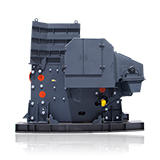
Jaw Crusher
- Working principle: Reciprocating compression between fixed and swing jaw plates for intermittent crushing.
- Capacity range: 50–1,500 TPH; max feed size ≤1,250 mm.
- Best for: Small-medium quarries, mobile processing stations, hard rock and construction waste recycling. Low foundation cost, easy maintenance.
- Limitations: Flaky discharge particles, unsuitable for ultra-large open-pit mines over 2,500 TPH.
Gyratory Crusher
- Working principle: Continuous circular gyrating mantle inside a fixed concave liner. Feeding and crushing happen simultaneously.
- Capacity range: 2,000–12,000 TPH, direct truck dumping without pre-screening.
- Best for: Large-scale iron, copper open-pit mines requiring high cubic aggregate quality.
- Limitations: Tall vertical structure, heavy reinforced concrete foundation, high upfront civil investment.
Cone Crusher
Secondary and tertiary fine crushing for medium-hard and hard rock. Adjust discharge opening to control finished particle size.
Applicable: Granite, basalt, limestone aggregate production, pre-grinding for flotation feed.
Impact Crusher
Crush materials via high-speed rotor impact force, good particle shaping performance.
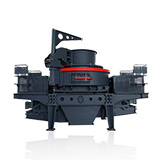
Applicable: Soft & medium-hard rock, manufactured sand production, recycled construction aggregate.

Fine Grinding Equipment
- SAG / AG Mill
Uses large ore lumps as grinding media, minimal steel ball filling. Suitable for large concentrators with high throughput. - Ball Mill
Steel balls as grinding media for fine slurry grinding, closed-circuit matched with hydrocyclones. Ideal for copper, lead-zinc flotation feed preparation. - Vertical Mill
Low-energy ultrafine grinding for refractory gold and lithium ore, cuts overgrinding loss compared to horizontal ball mills. - High Pressure Grinding Roll (HPGR)
Two counter-rotating rollers for inter-particle compression crushing. Save 15%–30% power compared with traditional grinding circuits.
Applicable: Gold, iron ore mine energy-saving transformation, diamond ore processing.

Screening & Classification Equipment
These machines separate ore particles by size, form closed-circuit circulation with crushing and grinding equipment to avoid oversize material circulation.
- Vibrating Screen
Multi-layer mesh dry screening machine, classify crushed rock into standard aggregate grades. Widely used after secondary crushing. - Hydrocyclone
Static centrifugal classifier for slurry separation. Coarse underflow returns to mills for re-grinding, fine overflow enters separation process. Small footprint, no moving parts. - Spiral Classifier
Screw spiral separates coarse sand and fine slurry, matched with ball mills in gravity separation circuits.
Mineral Separation & Concentration Equipment
The core stage of mineral processing, extract target minerals by differences in density, magnetism, floatability or optical properties.
Gravity Separation Equipment
- Jig Machine: Pulsating water stratifies coarse heavy minerals like tin, tungsten and iron sand.
- Shaking Table: Recover fine gold, tin concentrate through reciprocating bed motion.
- Spiral Chute: Low-cost gravity equipment for coastal heavy mineral sand, no power supply required.
Magnetic Separation Equipment
Separate minerals based on magnetic susceptibility gap.
- Wet Drum Magnetic Separator: Recover magnetite iron ore.
- High Gradient Magnetic Separator (HGMS): Remove iron impurities from quartz, feldspar and kaolin industrial minerals.
Flotation Cells
Core equipment for non-ferrous metal beneficiation. Add selective flotation reagents to attach target minerals to air bubbles and separate from gangue slurry.
Applicable: Copper, zinc, nickel, lithium mica, molybdenum sulfide ore.
Sensor-Based Ore Sorting Machine
Adopt X-ray, optical and near-infrared sensors to identify barren waste rock before comminution. Reject gangue in advance to cut downstream grinding energy consumption by up to 50%.
Applicable: Low-grade marginal ore, waste rock pre-separation for all kinds of mines.
Dewatering & Tailings Treatment Equipment
Concentrate and tailings slurry contain a large amount of water; dewatering equipment meets transportation, smelting and environmental protection standards.
- Thickener: Large-diameter gravity settling tank, recycle clear process water, concentrate slurry.
- Filter Press / Vacuum Filter: Produce low-moisture concentrate cake for smelting plants.
- Tailings Dry Stacking System: Combined thickener and filter equipment, reduce tailings pond occupation area and water consumption, meet global green mining ESG standards.

Factors to Consider When Selecting Mineral Processing Equipment
After clarifying all equipment types, evaluate the following key factors one by one to avoid blind selection and over-investment.
1. Raw Ore Mineral Characteristics
This is the primary decisive factor. All equipment performance is designed for specific ore properties.
- Ore hardness: Hard granite, basalt need gyratory or cone crushers; soft limestone can use impact crushers.
- Mineral grain size: Fine disseminated minerals require vertical stirred mills for ultrafine grinding; coarse-grained heavy sand only needs jig gravity separation.
- Clay and moisture content: High-clay sticky ore prefers gyratory crushers to avoid cavity blockage; jaw crushers are easy to bridge with wet sticky materials.
- Target mineral type: Magnetic iron ore chooses magnetic separators; copper sulfide ore must use flotation cells; heavy mineral sand adopts spiral chute gravity separation.
2. Target Production Throughput & Output Standard
Throughput divides the boundary of primary crushing equipment selection:
- Sustained hourly output below 1,500 TPH: Jaw crusher as primary crushing unit.
- Sustained hourly output above 2,000 TPH: Gyratory crusher is the only cost-effective choice.
Besides capacity, finished product standards also matter:
- High-standard highway cubic aggregate requires gyratory or cone crushers; jaw crushers are only qualified for low-standard construction backfill.
- High-purity lithium concentrate needs vertical stirred mill + multi-stage flotation cells.
3. Site Layout & Construction Restrictions
- Plant height limit: Underground mines, hillside compact plants cannot adopt tall gyratory crushers; low-profile jaw crushers are the only option.
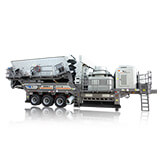
- Land area: Mobile integrated processing stations fit scattered demolition sites and temporary mining projects without fixed concrete foundations.
- Transportation access: Remote mountain mines without large lifting equipment should select jaw crushers with easy disassembly and maintenance.
4. Capital Investment & Long-Term Operating Cost (TCO)
Many investors only focus on upfront equipment price and ignore total cost of ownership:
- Initial capital: Jaw crushers have 30%–50% lower purchase and civil construction cost than gyratory crushers with the same feed size.
- Wear parts cost: Jaw plates are cheap and reversible; gyratory mantle and concave liner have high one-time replacement expense.
- Power consumption: HPGR and vertical stirred mills have higher initial investment but save 15%–30% electricity for long-term full-load operation.
- Asset reusability: Mobile crushing equipment can be transferred to multiple project sites with high residual value; fixed gyratory equipment has zero residual value of concrete foundation after project closure.
5. Energy Consumption & Carbon Emission Requirements
Global mining industries face stricter carbon emission policies.
- Large long-life mines must prioritize low-energy equipment: HPGR, vertical stirred mills and sensor ore sorters.
- Small temporary projects can choose conventional jaw-ball mill circuits with lower one-time input.
6. Environmental Protection & Tailings Disposal Rules
Local environmental regulations directly determine supporting equipment matching:
- Water resource limits: Dry tailings filter press system is mandatory in water-deficient areas instead of traditional tailings ponds.
- Dust and noise control: Equip crushers with integrated dust removal and silencing systems for residential surrounding mines.
- Solid waste recycling: Construction waste and mine tailings projects need mobile crushing + magnetic separation equipment to realize resource reuse.
7. Maintenance Labor & Spare Parts Supply
- Maintenance complexity: Jaw crushers only need 1–2 technicians for liner replacement within 4–8 hours downtime; gyratory crushers require 3–5 professional workers and over 24 hours overhaul time.
- Spare parts supply: Choose equipment brands with local overseas warehouses to reduce spare part waiting time and production shutdown losses.
Step-by-Step Equipment Selection Workflow
- Complete ore test analysis: Detect ore hardness, grain size, mineral composition, moisture and target concentrate grade.
- Confirm stable hourly throughput and project operation cycle (short-term temporary / long-term fixed mine).
- Measure site space, height limit and local environmental protection policies.
- Screen optional equipment models according to ore and site conditions, list 2–3 alternative schemes.
- Calculate TCO (total cost of ownership) of each scheme, compare initial investment, power consumption, wear parts and labor cost in 5–10 years.
- Check after-sales service, spare parts supply and equipment automation level of each model.
- Finalize the optimal equipment combination and complete the full processing flowsheet design.
Final Summary
- Mineral processing equipment is divided into four major categories: comminution, screening/classification, separation/concentration and dewatering & tailings treatment, each with clear applicable ore and capacity boundaries.
- Ore property is the core premise of equipment selection; throughput, site restriction, total operating cost and environmental rules are secondary indispensable evaluation dimensions.
- Do not judge equipment only by purchase price. Calculate long-term TCO to avoid high energy and maintenance losses caused by cheap mismatched machinery.
- Short-term, small-scale and mobile projects match jaw crushers and gravity separation equipment; super-large permanent open-pit mines adopt gyratory crushing, HPGR and full-automatic flotation circuits.
If you need customized mineral processing flowsheet design, ore test report analysis or equipment model recommendation for iron, copper, lithium or construction waste recycling projects, contact our engineering team for free one-on-one technical consultation.
FAQs About Choosing the Right Mineral Processing Equipment
Q1:Why is laboratory ore testing mandatory before purchasing mineral processing equipment?
A:Every mineral deposit has a unique mineralogical composition. Laboratory ore testing identifies the exact mineral grade, interlocking relationships, and optimal liberation size. Purchasing equipment without an ore analysis report often leads to catastrophic mismatches, such as low mineral recovery rates, severe over-grinding, or rapid wear of expensive liner components.
Q2:How do you balance CAPEX and OPEX when choosing beneficiation machinery?
A:While lower initial capital expenditure (CAPEX) is attractive, equipment with poor energy efficiency or weak wear resistance drastically increases long-term operational costs (OPEX) due to high electricity consumption and frequent downtime. Mine operators should evaluate the 'total cost of ownership' by prioritizing high-efficiency motors, advanced automation control systems, and high-chromium/manganese wear parts.
Q3:Does ZENITH provide complete turnkey EPC services for mineral processing plants?
A:Yes, ZENITH provides comprehensive turnkey EPC (Engineering, Procurement, and Construction) solutions globally. Our services cover professional mineral testing, customized process flowsheet design, full-scale equipment manufacturing, localized on-site installation, plant commissioning, and operational technical training.