

Why Mobile Crushers Win in Remote West Africa
West Africa is home to some of the world's most promising mineral deposits. From the gold-rich Ashanti belt in Ghana to the iron ore reserves in Guinea and the bauxite fields of Sierra Leone, the region is a mining powerhouse. However, these opportunities come with a unique set of harsh realities: remote locations, non-existent power grids, and punishing logistical challenges. The solution? Mobile Crushing Plants.
In remote West African mining sites, a mobile crushing plant offers advantages that stationary systems cannot match. Unlike fixed installations that require concrete foundations and weeks of setup, a mobile crusher can be operational within hours of arrival.
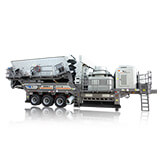
This mobile unit eliminates the need to haul material to a distant stationary plant, directly reducing fuel costs and truck traffic. For operators moving between sites every 6-12 months, investing in a mobile crushing solution delivers faster payback than permanent infrastructure.

1. Zero Foundation Requirements: Beating the Logistics Trap
Building a stationary plant in the African bush requires massive concrete foundations, steel structures, and months of civil engineering work. By the time the plant is operational, the rainy season might have already halted your hauling trucks.
ZENITH mobile crusher eliminate this bottleneck. They are pre-assembled on robust chassis. Once the low-bed trailer delivers the unit to the site, it can be tracked or towed directly to the rock face, unfolded, and start producing aggregates within hours, not months. When the quarry face moves, the crusher moves with it, drastically reducing the cost of hauling raw materials with dump trucks.
2. The Right Primary Setup for West African Hard Rock
West Africa is famous for its hard, abrasive materials like granite, basalt, and gold-bearing quartz. Processing this material requires the right engineering logic.
For the primary stage, a heavy-duty Mobile Jaw Crusher is the absolute necessity. It utilizes pure compressive force to break down large, tough boulders with minimal wear part consumption.
Crucial Engineering Rule: You must never use an impact crusher in the primary crushing stage for these types of abrasive hard rocks. Using an impact crusher as a primary unit will result in blow bars being destroyed almost instantly, causing catastrophic downtime and skyrocketing replacement costs in remote areas where spare parts take weeks to arrive.

3. Diesel Generator Compatibility and Energy Efficiency
Off-grid mining means relying 100% on diesel generators. In countries where diesel prices fluctuate and transportation deep into the jungle adds massive premiums to fuel costs, the energy efficiency of your crushing plant dictates your profit margin.
Modern mobile crushers are designed with optimized diesel-electric or direct-drive systems that maximize power transfer.
4. Simplified Maintenance in Extreme Conditions
When your site is 500 kilometers from the nearest major city, a mechanical breakdown can paralyze your operation. Mobile crushers are engineered for these exact scenarios.
- Centralized Lubrication: Automated systems ensure bearings are constantly protected from the extreme West African dust and heat.
- Hydraulic Adjustments: Adjusting the Closed Side Setting (CSS) or clearing a stalled crushing chamber is done via push-button hydraulics, eliminating the need for heavy manual labor or specialized external cranes.
FAQs About Mobile Crushers in West Africa
Q1: Can a mobile crusher achieve the same capacity as a stationary plant?
A: Yes. Modern mobile jaw and cone crushers are built using the exact same crushing chambers as their stationary counterparts. A well-configured mobile train (Primary Jaw + Secondary Cone + Mobile Screen) can comfortably produce 200 to 400 tons per hour (TPH), competing directly with large static setups.
Q2: Are track-mounted or wheel-mounted crushers better for West Africa?
A: It depends on your site mobility. If you are operating inside a rugged mining pit and need to move the crusher daily alongside the excavators, track-mounted is the best choice. If you are a contractor moving the plant between different highway projects every few months on established roads, wheel-mounted (towed by a truck) offers a more cost-effective mobilization.
Q3: How do we handle spare parts in remote locations?
A: When purchasing a mobile plant for a remote site, always negotiate a comprehensive "Commissioning Spare Parts Package" that includes at least one year's worth of wear parts (jaw plates, cone mantles, screen meshes) and critical filters. ZENITH designs its mobile stations with standardized parts to ensure easier inventory management.
In the West African mining and aggregate sector, the contractors who win are those who can mobilize quickly, crush efficiently on generator power, and adapt to changing site conditions without pouring a single yard of concrete. A mobile crushing plant isn't just a piece of machinery; it's a risk management strategy for off-grid operations.