

Jaw Crusher vs. Cone Crusher vs. VSI Crusher vs. Mobile Crusher
To maximize your ROI for the 2026 season, selecting a crusher is no longer just about buying "heavy iron"—it is about engineering a metallurgical ecosystem. Choosing the wrong machine doesn't just lower efficiency; it accelerates wear costs, increases energy waste, and creates "bottlenecks" that can paralyze an entire site.
Below is an expanded, professional deep dive into the four pillars of crushing technology: Jaw Crusher, Cone Crusher, VSI Crusher, and Mobile Crusher, including technical nuances that differentiate a profitable operation from a struggling one.

Comprehensive Performance Comparison Table
| Technical Parameter | Jaw Crusher | Cone Crusher | VSI Crusher | Mobile Crusher |
|---|---|---|---|---|
| Primary Function | Bulk Reduction | Sizing & Grading | Shaping & Sand Making | Flexibility / On-site Processing |
| Crushing Method | Compression | Compression | Impact | Varies (Jaw, Cone, or Impact) |
| Max Feed Size | Up to 1200 mm | Up to 350 mm | Up to 50 mm | Up to 1000 mm |
| Max TPH Capacity | Very High | High | Medium | Medium to High |
| Reduction Ratio | 4:1 - 6:1 | 3:1 - 5:1 | 2:1 - 3:1 | High (Integrated System) |
| Product Shape | Elongated / Flaky | Good (Cubical) | Excellent (Perfect Cubical) | Varies by crusher type |
| Abrasiveness Limit | Very High | High | Low to Medium | Varies |
| Moisture Tolerance | High | Low (Sticky = Bad) | Medium | Medium |
| OPEX per Ton | Low | Medium | High (if abrasive) | Low (Saves Hauling Costs) |
The Primary Powerhouse: Jaw Crushers
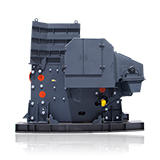
The Jaw Crusher is the "beast of burden" in any flowsheet. Operating on the principle of compression, it uses a fixed jaw and a moving jaw (pitman) to reduce massive boulders into manageable sizes.
- The Nip Angle: Professional jaw crushers are designed with an optimized nip angle—the angle between the two jaw plates. A steeper angle ensures that hard rocks don't "pop out" of the chamber, increasing safety and throughput.
- Deep Chamber Design: In 2026, ZENITH’s jaw crushers utilize a deep-chamber design which allows for a larger feed size and a higher reduction ratio, often reaching up to 6:1.
- Best for: High-strength, abrasive materials (Granite, Basalt, Quartzite) and recycled concrete.
- The Limitation: Because it relies on a "squeeze" motion, the final product is often "slabby" or elongated. It is a volume-mover, not a shape-shifter.
The Secondary Specialist: Cone Crushers
Cone Crushers are the workhorses of the secondary and tertiary stages. They utilize a gyrating mantle to crush material against a stationary concave (bowl liner).
- Inter-particle Crushing: High-end cone crushers don't just crush rock against steel; they use the "inter-particle crushing" theory. By keeping the crushing chamber full (choke-feeding), the rocks crush each other, significantly improving the cubical shape of the final aggregate.
- Hydraulic Intelligence: Modern units feature hydraulic tramp release systems. If a piece of "uncrushable" iron enters the chamber, the hydraulics automatically open to let it pass, then reset to the original Closed Side Setting (CSS) in seconds.
- Chamber Versatility: Operators can swap between "Standard" (coarse) and "Short Head" (fine) chambers depending on whether they are producing ballast or fine aggregate.
- Best for: Medium-to-hard abrasive rocks where consistent size distribution is critical.
The Shape Master: VSI (Vertical Shaft Impactor)
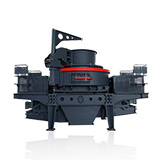
The VSI crusher represents a shift from compression to impact energy. By flinging rocks at ultra-high speeds, it shatters them along their natural geological fault lines.
- Rock-on-Rock (Autogenous) Crushing: The VSI forms a "rock shelf" inside the crushing chamber. The rotor flings incoming material against this shelf. This "rock-on-rock" collision ensures that wear costs are kept to a minimum even when processing abrasive materials.
- Manufactured Sand (M-Sand): With the global shortage of natural river sand, the VSI is the industry's most critical tool for producing high-quality M-Sand with a perfect fineness modulus.
- The Shaping Effect: The high-velocity impact "polishes" the aggregate, removing sharp edges and producing a nearly perfect cubical shape, which is mandatory for high-performance concrete.
The Agile Alternative: Mobile Crusher
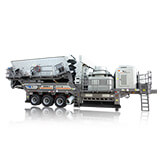
A Mobile Crusher is an integrated processing system mounted on a tracked or wheeled chassis. It allows the plant to "follow the face" of the mine.
- Hybrid Drive Technology: In 2026, the trend is toward E-Mobile units. These use an onboard diesel generator to power electric motors for the crushers, allowing for a 30% reduction in fuel consumption compared to traditional hydraulic drives.
- Integrated Logistics: A single mobile unit often replaces a primary crusher, a feeder, and a conveyor belt. This eliminates the need for expensive haul truck cycles, as the crusher moves with the excavator.
- Quick Deployment: While a stationary plant takes months to permit and build, a mobile unit can be offloaded from a trailer and be producing TPH within hours.
How to Choose the Right Crusher: 3 Strategic Decision Pillars
Choosing a crusher is not just a technical purchase; it is a strategic investment. To ensure you select the equipment that delivers the highest ROI, SBM’s engineering team recommends focusing on these three mission-critical pillars:
1. Target Product Value
Before looking at the machine, look at your sales contract. Your crusher must be the tool that produces your most expensive product.
- Aggregates for High-Strength Concrete: If your market pays a premium for "perfect cubical" stones with zero cracks, a VSI Crusher is mandatory. It uses high-speed impact to eliminate natural weak planes in the rock.
- Sub-base & General Construction: If you are producing bulk road base or railway ballast, a Jaw-Cone circuit provides the highest volume at the lowest cost, as grain shape is less critical than tonnage.
- M-Sand Production: With natural sand becoming scarce, a VSI (Sand Maker) is the only way to produce high-quality manufactured sand with the correct fineness modulus.
2. Feed Material Complexity
The "nastier" your raw material, the more robust your selection must be.
- Sticky & Dirty Ores: If your feed contains clay or high moisture, a Cone Crusher can "plug" and cause downtime. In these cases, a specialized Jaw Crusher with a vibrating grizzly feeder or a wide-clearance Impact Crusher is much safer.
- Extreme Hardness: For rocks with high compressive strength (like Corundum or Quartzite), skipping a Jaw Crusher as the primary stage will lead to premature structural failure of your secondary units. Always lead with the "brute force" of a Jaw.
3. Logistic & Infrastructure Constraints
The hidden cost of crushing isn't the machine—it's how you get the material to it.
- The High-Haul Risk: If your quarry face is moving 500 meters every year, the fuel cost of your truck fleet will eventually kill your profits. A Mobile Crushing Plant "follows the stone," eliminating haul truck cycles and drastically cutting your carbon footprint and diesel bill.
- Site Permanence: If you own the land and have a 10+ year reserve, the stability and high-capacity TPH of a Stationary Plant offer the lowest cost-per-ton over the long run. If you are a contractor moving from site to site, mobility is your only path to cash flow.
Selecting a crusher is a balance of metallurgy, physics, and finance. At ZENITH, we don't just sell "iron"—we provide the engineering intelligence to ensure your plant operates at peak TPH with the lowest possible cost-per-ton.