

How to Start a Quarry Crushing Plant with a Limited Budget?
Starting a quarry crushing business is a capital-intensive venture, but a limited budget doesn't have to be a barrier to entry. Across Africa, Southeast Asia, and Latin America, many successful aggregate producers began with modest setups and expanded through disciplined reinvestment. The difference between failure and success is not how much you invest initially, but how strategically you allocate capital.
The core principle is simple:
Prioritize mechanical reliability and cash flow generation over aesthetics, automation, or oversized capacity.
This guide provides a professional, engineering-backed roadmap to launching a quarry crushing plant while maintaining lean CAPEX and designing for scalable growth.

1. Strategic Site Selection: Minimize the "Invisible" Costs
Before a single machine is purchased, your choice of location will dictate your daily operating costs.
- Proximity to Market: Aggregates are low-value, high-weight commodities. Transport costs can quickly exceed the production cost. Ensure your site is within 30–50km of major infrastructure projects or urban centers.
- Topography as an Asset: If your budget is tight, use gravity. Placing your primary crusher at a higher elevation than your secondary screens allows material to flow via shorter conveyors or even chutes, reducing the number of expensive belts and motors required.
- Permitting and Land: In many regions, leasing land with an existing mining license is significantly cheaper than undergoing the multi-year process of securing a new "Greenfield" permit.
2. Equipment Strategy: The "Core-First" Approach
When funds are limited, avoid the temptation to buy a "complete turnkey plant" with all the bells and whistles. Instead, focus on the Primary and Secondary stages.
A. Phase 1: The Modular Starter Kit
Start with a Primary Jaw Crusher and a Vibrating Screen.
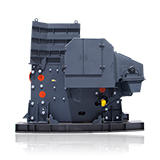
- Why a Jaw Crusher? They are the workhorses of the industry. They handle large feed sizes and have fewer moving parts than cone crushers, meaning lower maintenance costs for a beginner.
- The "Closed-Circuit" Shortcut: Instead of buying three crushers, set up your plant in a closed circuit. Uncrushed material from the screen is sent back to the jaw crusher. While this limits your total TPH (Tons Per Hour), it allows you to produce high-quality sized aggregate with only one or two machines.
B. New vs. Used vs. High-Value Manufacturers
- The Used Equipment Risk: Buying used European or American brands can be tempting, but in remote areas, a used machine often comes with hidden fatigue and no warranty.
- The High-Value Choice: Many investors now opt for top-tier Chinese manufacturers (like ZENITH). These provide the balance of modern technology and lower acquisition costs, often coming in at 40% less than premium Western brands while offering better parts availability in developing markets.
3. Focus on Infrastructure Minimalism
You don't need a paved yard and a steel office building on Day 1.
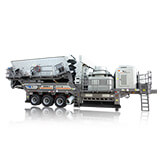
- Skid-Mounted vs. Fixed Foundations: Instead of pouring massive concrete foundations (which are expensive and permanent), use skid-mounted or semi-mobile designs. These can be placed on compacted earth or simple concrete pads, drastically reducing civil engineering costs.
- Used Shipping Containers: Use refurbished containers for your control room, tool storage, and staff breakroom. They are secure, portable, and cost a fraction of traditional construction.
4. Operational Lean Management
Once the plant is running, the goal is to reach a "Cash-Flow Positive" state as quickly as possible.
- Contracted Hauling: Don't buy a fleet of delivery trucks immediately. Partner with local independent owner-operators. You focus on production; let them focus on logistics and vehicle maintenance.
- Energy Management: If the local grid is unavailable, don't buy a brand-new oversized generator. Rent a power unit for the first six months. This preserves your cash for operational spikes and allows you to "right-size" your permanent power solution once you know your actual load.
- Direct-to-Consumer Sales: Sell "crusher run" (unscreened material) for road base in the beginning. It requires less processing and provides immediate liquidity while you fine-tune your screening for high-value concrete aggregates.
| Expense Category | Budget-Saving Strategy | Long-Term Impact |
|---|---|---|
| Primary Crusher | Heavy-duty Jaw Crusher | High durability, low maintenance costs. |
| Foundations | Steel skids or compacted earth pads | Lower initial CAPEX and faster site setup. |
| Power Supply | Rental generator or used Tier 3 engine | Preserves cash flow for critical spare parts. |
| Conveyors | Modular / Standardized lengths | Easy to expand or reconfigure as you grow. |
| Labor | Multitasking trained staff | Lower monthly overhead and higher team skill level. |
5. The "Growth Spiral" Methodology
The most professional way to start small is to design for Phase 2 on Day 1.
- Year 1: Primary Jaw + Screen (Produce road base and 0-40mm).
- Year 2: Reinvest profits into a Secondary Cone Crusher. This allows you to produce high-margin 5-10mm and 10-20mm "chips" for concrete.
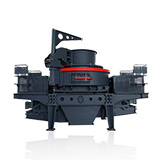
- Year 3: Add a Sand Maker (VSI) to capture the high-demand manufactured sand market.
6. Common Mistakes to Avoid
- Oversizing capacity
- Over-investing in automation
- Ignoring transport distance
- Underestimating wear part cost
- Buying cheapest equipment without support
- Neglecting future expansion layout
In quarrying, survival depends on operational stability, not technical complexity.
Starting a quarry crushing plant with a limited budget is an exercise in prioritization. By investing in a high-quality primary crusher, utilizing modular designs, and keeping your infrastructure lean, you can enter the market with significantly lower risk. The goal is to build a plant that is "functional and rugged," not "perfect and expensive."