

How Much Does a Cone Crusher Cost?
Directory
A single cone crusher typically costs between $25,000 and $1000,000+, and that spread is not marketing vagueness — it is the honest consequence of three variables that change the machine entirely: the type of cone crusher (spring, single-cylinder, or multi-cylinder), the throughput class, and the configuration you specify around it. For a mid-size aggregates operation running 200–300 t/h, the cone crusher alone usually lands between $150,000 and $400,000. A complete plant in that capacity band, with feeders, screens, conveyors, and controls, runs from $750,000 to $1,500,000 and up.
This guide breaks the number down the way an application engineer actually does it — by type and capacity, then by the costs buyers forget until the invoice arrives.
Key takeaways
- Price scales with throughput class first, then with hydraulic sophistication (spring → single-cylinder → multi-cylinder), then with chamber and automation options.
- The crusher is typically only 40–60% of the delivered, installed cost of adding a crushing stage.
- Cost per ton, not purchase price, decides whether the machine makes money — a $200,000 cone with poor liner life can cost more than a $350,000 one.
- The three families ZENITH builds — HPT, HST, and S series — overlap in capacity but not in application, and the price gap between them reflects real metallurgical and control differences, not branding.

What a Cone Crusher Actually Costs
The table below gives budgetary planning ranges for new Chinese-manufactured cone crushers in 2026. They are indicative planning figures, not quotations — two machines in the same capacity class can differ by 40% depending on chamber configuration, drive arrangement, automation package, wear-material grade, and delivery terms.
| Machine family | Throughput range | Indicative unit price (USD, FOB) | Typical application |
|---|---|---|---|
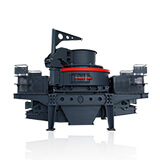
| S series (spring cone) | 27–1400 t/h | $25,000 – $180,000 | Secondary/tertiary in small and mid-size quarries; budget-constrained retrofits; moderate abrasion |
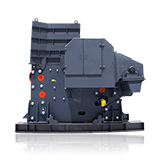
| HPT (multi-cylinder) | 45–1200 t/h | $120,000 – $900,000 | Aggregates secondary/tertiary with cubical product; manufactured sand; large stationary plants |
| HST (single-cylinder) | 27–2185 t/h | $110,000 – $1,000,000 | Hard and abrasive rock; fine and ultra-fine crushing; high reduction ratio; large mining duty |
Three observations that matter more than the numbers themselves. First, capacity is the dominant multiplier — doubling throughput roughly doubles price at the low end and more than doubles it at the high end, because frame size, bearing class, and hydraulic system scale non-linearly. Second, the same capacity costs different money in different families: a 300 t/h spring cone is fundamentally cheaper than a 300 t/h multi-cylinder, and the difference is in the hydraulic control, the chamber options, and the frame rigidity that lets you run a tighter closed side setting. Third, the range inside a single cell is wider than the gap between cells — which is why a quotation comparison based on "price per t/h" without a full specification is meaningless.
HPT vs HST vs S Cone Crusher: Which One Fits Your Rock and Your Budget
All three families crush rock with the laminar principle, and on paper their capacity ranges overlap heavily. In practice they are built for different duty cycles, and the price difference tracks that.
| HPT (multi-cylinder) | HST (single-cylinder) | S (spring) | |
|---|---|---|---|
| Capacity range | 45–1200 t/h | 27–2185 t/h | 27–1400 t/h |
| Max. feed size | 350 mm | 560 mm | 369 mm |
| Min. discharge setting | 6 mm | 4 mm | 3 mm |
| Crushing stage | Secondary | Secondary (hard rock, fine) | Secondary / tertiary |
| Adjustment | Hydraulic, multi-cylinder release | Hydraulic, single-cylinder with large stroke | Hydraulic lubrication, spring overload |
| Control | PLC with continuous monitoring and alarms | Intelligent control system | Conventional |
| Best fit | Cubical aggregate shape at high tonnage | Hard, abrasive ore; tight settings; high reduction ratio | Cost-sensitive projects, stable medium-hard rock |
| Budget position | Mid to high | High | Entry |
The engineering logic behind the ranking is straightforward. The S series Cone Crusher uses a spring as its overload protection: simple, rugged, cheap to own, and perfectly adequate when your rock is medium-hard and your product spec is not aggressive. Its limitation shows up when you need a tight closed side setting in abrasive rock — the spring releases before the hydraulic system would, and the machine protects itself by stopping production.
The HPT Multi-cylinder Hydraulic Cone Crusher adds multi-cylinder hydraulics, which buy you two things that show up in the balance sheet: a much wider range of available chambers (so you can move from coarse secondary to fine tertiary by changing liners rather than changing machines), and PLC monitoring that catches a rising bowl pressure or a drifting setting before it becomes a broken main shaft. That is why HPT dominates manufactured-sand and high-spec aggregate work.
The HST Single Cylinder Hydraulic Cone Crusher is the hard-rock specialist. Single-cylinder design with a large stroke and a 560 mm feed opening lets it take coarser feed and push a higher reduction ratio per stage, which matters in metallic ore where you want to eliminate a stage entirely. It reaches 2185 t/h — the widest capacity span of the three — and its 4 mm minimum setting suits fine crushing duty. You pay for that capability.
A practical rule we use when scoping: if the rock is medium-hard, the product spec is standard aggregate, and the budget is fixed, start with S. If shape and uptime drive revenue, start with HPT. If the ore is hard and abrasive and you want one less stage, start with HST. Choosing the wrong family is the single most expensive mistake in this purchase — not because the machine is bad, but because you will spend the next decade paying for capability you do not use, or losing production to capability you do not have.
7 Factors Influencing the Cone Crusher Price
1. Throughput class and frame size. A crusher is priced like a pressure vessel: the cost sits in the mass of the frame, the size of the bearings, and the tonnage of steel in the eccentric assembly. Moving from a 250 t/h to a 600 t/h machine does not add 2.4× the steel — it adds far more, because rigidity requirements scale faster than capacity.
2. Chamber configuration and liner material. Standard manganese vs. premium alloy, coarse vs. fine chamber, and the number of optional chamber profiles all move the number. A premium chamber set can add a meaningful percentage to the unit price and pay it back within one liner cycle in abrasive rock.
3. Drive arrangement. Direct drive through a V-belt and pulley is the baseline. Hydraulic drive, variable frequency control, or an integrated drive skid each add cost — and each buys you the ability to match crusher speed to the feed, which is worth real money in a plant that sees variable rock.
4. Automation and instrumentation. The step from a conventional control panel to a PLC system with continuous monitoring, alarm display, and remote access is not a luxury in a 1,000 t/h plant. It is the difference between catching a bowl overload in seconds and discovering it as a scored socket liner.
5. Certification and documentation. CE, SGS, GOST, and ISO compliance, plus full material certificates, weld documentation, and a spare-parts book in the buyer's language, are real costs. Projects financed by development banks or exported into regulated markets often cannot accept a machine without them.
6. Structural options. Skid-mounted vs. fixed foundation, galvanized vs. painted structure, winterization packages for cold climates, dust suppression, and noise enclosures all appear as line items.
7. Commercial terms. FOB vs. CIF, payment schedule, warranty length, commissioning support, and spare-parts commitment change the effective price by more than most buyers expect. A quote that looks 8% cheaper is often a quote with the liner package, the control cabinet, and the commissioning engineer removed.
What Is Not in the Crusher Price (But Is in Your Budget)
This is the part of the conversation where project budgets actually fail. The unit price is one line in a capital estimate that has eight or nine others.
| Cost element | Typical share of delivered-and-installed cost | Notes |
|---|---|---|
| Crusher unit | 40–60% | The quoted machine |
| Freight and insurance | 5–12% | Highly sensitive to destination and shipping mode |
| Import duty and clearance | 0–15% | Country-specific; check before you compare quotes |
| Steel structure and chutes | 5–10% | Often owner scope |
| Electrical and control | 5–8% | MCC, cabling, PLC integration |
| Civil works and foundations | 10–20% | Highest variance; depends on soil and site |
| Installation and commissioning | 5–10% | Includes crane time and engineer mobilization |
| First fill of wear parts and spares | 3–5% | Frequently missing from budget |
| Training and documentation | 1–2% | Cheap to buy, expensive to skip |
Two of these deserve emphasis. Civil works is the line most often underestimated by first-time buyers, because a cone crusher is a dynamic machine: its foundation carries both static load and cyclic crushing force, and a foundation designed for static load alone will crack. First fill is the line most often forgotten, and it means the project stalls in week one because there is no spare mantle on site.
When you compare two quotations, normalise them to the same scope before comparing price: same chamber, same liner grade, same control package, same commissioning days, same Incoterm, same spares list. An apples-to-apples comparison usually shrinks a 20% price gap to under 10% — and sometimes reverses it.
Total Cost of Ownership: The Cost Per Ton Calculation
Purchase price is a one-time number. Cost per ton is the number that decides whether the investment works. Here is the arithmetic on a realistic mid-size installation.
Assumptions: 250 t/h secondary cone on granite, 3,000 operating hours per year, installed power 250 kW, average load factor 0.75, electricity at $0.10/kWh, liner set life 1,200 hours, liner set cost $9,000, one maintenance technician at 0.3 FTE on $18,000/year, capex $300,000 amortised over 8 years.
| Item | Annual cost | Cost per ton |
|---|---|---|
| Energy (562,500 kWh) | $56,250 | $0.075 |
| Wear parts (2.5 liner sets) | $22,500 | $0.030 |
| Maintenance labour | $5,400 | $0.007 |
| Capex amortisation (8 years) | $37,500 | $0.050 |
| Total | $121,650 | $0.162 |
So the crushing stage costs roughly 16 cents per ton at the discharge belt. Now change one variable: a machine whose liner life is 800 hours instead of 1,200. Wear cost rises from $0.030 to $0.045 per ton, and total cost per ton goes to $0.177 — a 9% penalty across the life of the asset, which on 750,000 t/year is about $11,000 annually, or $88,000 over eight years. That is the real argument for specifying a better chamber and a better liner alloy: not that the machine is nicer, but that the per-ton math changes.
Run the same model with your own numbers before you sign. If a supplier cannot tell you the liner life they expect in your specific rock, they have not engineered the application — they have quoted a catalogue item.
How to Read a Cone Crusher Quotation
A useful quotation answers seven questions. If any is missing, the price is not comparable.
- Which chamber? Coarse, medium, fine, or extra-fine, and the resulting closed side setting range. "Standard chamber" is not an answer.
- What is the guaranteed throughput at that setting, in your rock? Not the catalogue maximum — the number they will stand behind for your feed gradation and abrasivity.
- Which liner alloy, and what life do they expect? Ask for the expected hours per set in comparable rock, and the unit price per set.
- What is included in the control package? Panel only, or PLC with monitoring and remote access. Ask for the I/O list.
- What is the scope boundary? Steel structure, chutes, motors, starters, commissioning days, training, and the spares list should be explicit — ideally as an attachment.
- What is the delivery and warranty structure? Lead time from down payment, warranty period and what voids it, and the response commitment for spare parts.
- What is the payment schedule? Deposit, pre-shipment, and retention split tells you as much about the supplier as the price does.
Red flags worth pausing on: a price dramatically below the market band with no explanation of what was removed; throughput quoted as a single maximum with no setting specified; a warranty that excludes wear parts without stating expected liner life; and a quotation that does not mention commissioning at all.
How to Reduce Cost Without Buying a Worse Machine
Five levers, in order of impact.
Right-size the crusher to the plant, not to the brochure. A machine running at 60% of rated capacity wastes capital; a machine running at 105% burns liners and bearings. Target 75–85% of rated capacity at your design throughput, and specify the next size up only if you have a credible expansion plan.
Screen before you crush. Scalping fines ahead of the cone removes material that would pass through anyway. On many quarry feeds this alone raises effective crusher capacity by a meaningful margin, which is the cheapest capacity you will ever buy.
Run choke-fed, not trickle-fed. A cone crusher is designed to be choke-fed: the chamber should be kept full so rock crushes against rock as well as against liners. Trickle feeding produces poor shape, higher wear per ton, and lower throughput — it is the most common operating error we see on commissioning.
Match the liner profile to the stage, and change it on condition, not on calendar. Liner life varies with feed gradation and abrasivity; tracking hours per set lets you move from a coarse to a finer profile at the right moment instead of replacing on a fixed schedule.
Localise your spare-parts strategy. The single largest avoidable cost in a cone crusher's life is downtime waiting for a mantle. A modest local stock of liners, filters, and seals typically costs less than three days of lost production.
Where Cone Crusher Prices Are Heading in 2027
Three structural forces are pushing prices up, and one is pulling them down.
Steel and castings. Crusher frames, mantles, and bowl liners are heavy castings and heavy plate. Manganese and alloy steel prices move with ferroalloy and energy costs, and casting capacity in China has been consolidating — which historically means less aggressive pricing, not more.
Freight and logistics. Cone crushers ship as heavy, awkward, out-of-gauge cargo. Container rates and heavy-lift availability affect delivered cost far more than the factory price list suggests, especially for 600 t/h and above.
Compliance and documentation. Certification, traceability, and after-sales commitments in regulated markets are a growing share of the cost base — and they are not optional if you are financing through a development bank.
The counter-force is competition on total cost of ownership. Chinese manufacturers are increasingly competing on liner life, uptime, and service response rather than on sticker price, because buyers have learned that the cheapest machine is rarely the cheapest ton. Expect the headline price band to stay roughly where it is while the specification included at that price keeps improving.
Frequently Asked Questions
How much does a cone crusher cost?
Budget $25,000–$80,000 for a small spring cone in the 27–200 t/h class, $120,000–$400,000 for a 100–300 t/h multi-cylinder or single-cylinder machine, and $500,000–$1,000,000 for a 600 t/h-plus unit. These are indicative ranges; the final number depends on chamber, liner alloy, automation, and delivery terms.
Is a used cone crusher cheaper?
On purchase price, usually yes — often 40–60% of new. On total cost, frequently no: you inherit unknown liner history, a possibly worn main shaft seat, obsolete control parts, and no warranty. Used machines make sense when you have the inspection capability to assess them and a short duty cycle.
What is the cheapest option for 100 t/h of medium-hard rock?
A spring cone in the S series, sized so that 100 t/h sits at roughly 75–80% of rated capacity. It will cost materially less than a hydraulic machine of the same throughput and will do the job, provided your product spec does not demand tight settings or premium shape.
Does a higher price always mean a better machine?
No. Price tracks capability, not quality. An over-specified machine on an easy application costs more and delivers nothing extra. The right question is which capability your rock and product spec actually require.
How long is delivery?
Standard configurations typically ship in weeks rather than months; large frames and custom chambers take longer. Always confirm lead time from down payment, not from order date, and add transit and clearance time for your destination.
Conclusion
Cone crusher pricing is not mysterious once you separate three things that buyers routinely mix together: the machine price, the delivered-and-installed cost, and the cost per ton over the asset's life. The first is a negotiation. The second is a budget. The third is the only one that determines whether the project was a good decision.
If you are sizing a machine now, start from the rock and the product spec, choose the family that matches the duty, and price the full scope — then compare cost per ton. That sequence almost always produces a different, and better, answer than starting from someone else's price list.
Send us your seven inputs — feed material, feed size, product spec, target throughput, operating hours, available power, and destination — and our application engineers will come back with a sized machine, a real scope, and a budgetary cost per ton rather than a headline price.
Previous: 7 Tips to Optimize Your Jaw Crusher Performance
Next: go back