

Gold Processing Business in Ghana: Equipment Guide and ROI Analysis
Ghana stands as Africa's largest gold producer, driven by rich reserves across both hard-rock deposits and alluvial gold reserves. For mining investors and mine operators, entering Ghana's gold mining sector offers significant profit potential. However, moving from raw deposit extraction to refined gold recovery requires a clear capital expenditure strategy, proper machinery selection, and realistic return-on-investment (ROI) forecasting.
This comprehensive guide breaks down the core gold processing methodologies in Ghana, essential machinery configurations, complete capital requirement breakdowns, and realistic ROI models for small to medium-scale processing operations.

Overview of Gold Deposit Types in Ghana
Before selecting processing machinery, operators must determine their specific deposit characteristics. Ghana features two primary gold deposit profiles:
- Alluvial (Placer) Gold Deposits: Commonly found along riverbeds, floodplains, and gravel layers in regions like Ashanti, Western, and Eastern Ghana. Gold particles are unconfined and mixed with silt, sand, and clay, requiring high-volume washing, gravity separation, and screening without heavy crushing.
- Hard-Rock (Primary Ore) Gold Deposits: Gold encapsulated within quartz veins, Birimian greenstone belts, and Tarkwaian conglomerates. Processing requires multi-stage size reduction (crushing and grinding) to liberate gold particles prior to gravity or chemical extraction.
Essential Equipment Guide for Gold Processing in Ghana
A reliable gold processing circuit directly dictates recovery rates and operational downtime. Below are the standard machinery setups according to deposit type.
1. Hard-Rock Gold Processing Circuit
Hard-rock processing relies on size reduction followed by gravity concentration or leaching:
- Primary Crushing (Jaw Crusher): Reduces ROM (Run-of-Mine) ore sizes up to 500–750 mm down to 50–100 mm. Robust jaw crushers handle abrasive quartz veins cleanly.
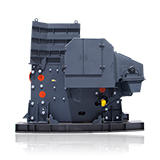
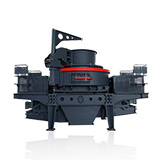
- Secondary Crushing (Cone Crusher / Impact Crusher): Further reduces crushed rock to 10–20 mm, creating ideal feed for fine grinding.
- Grinding (Ball Mill or Wet Pan Mill): The ball mill grinds coarse particles into fine slurry (often 74 microns / 200 mesh) to fully liberate embedded gold.
- Gravity Separation (Centrifugal Concentrators & Shaking Tables): High-g centrifugal concentrators extract free gold efficiently, while shaking tables perform final enrichment before smelting.
- Chemical Extraction (CIL/CIP Tanks or Heap Leaching): Used for fine or refractory gold where gravity alone yields sub-optimal recovery.
2. Alluvial Gold Washing & Separation Circuit
Alluvial circuits focus on high-throughput material washing and gravity recovery:
- Feed Hopper & Vibrating Feeder: Regulates feed rate from excavators into the washing plant.
- Trommel Washer / Rotary Scrubber: Breaks down sticky clay matrixes and washes gravel clean before screening.
- Vibrating Screen: Separates coarse oversize boulders from fine gold-bearing sands.
- Pulsating Sluice Box & Gold Centrifuge: Captures coarse and fine free gold particles through density differentials.
3. Semi-Mobile & Modular Processing Lines
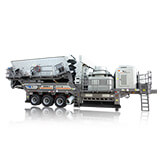
Given regional infrastructure conditions in Ghana, modular skid-mounted and semi-mobile plants have gained massive popularity. These configurations eliminate heavy concrete civil foundation costs, lower transit freight fees, and allow rapid relocation as mining fronts advance.
Financial Investment Breakdown (CAPEX & OPEX)
To evaluate a 50–100 TPH (Tons Per Hour) hard-rock gold processing plant in Ghana, capital and operational requirements generally break down as follows:
1. Initial Capital Expenditure (CAPEX)
- Machinery Purchase (Crushing, Grinding & Gravity Line): $180,000 – $350,000
- Shipping, Tema/Takoradi Port Clearance & Local Transit: $25,000 – $45,000
- Site Preparation, Steel Structure & Installation: $30,000 – $60,000
- Power Genset System (300–500 kVA): $35,000 – $55,000
- Environmental & Regulatory Licensing (MINCOM, EPA): $15,000 – $30,000
- Total Estimated CAPEX: $285,000 – $540,000
2. Operational Expenditure (OPEX per Month)
- Diesel Fuel & Power Supply: $15,000 – $25,000
- Wear Parts & Consumables (Jaw plates, steel balls, liners): $6,000 – $12,000
- Labor & Engineering Maintenance: $8,000 – $15,000
- Water Management & Chemical Reagents (if applicable): $4,000 – $8,000
- Total Estimated Monthly OPEX: $33,000 – $60,000
ROI & Payback Analysis for a 100 TPH Hard-Rock Plant
The following financial model illustrates conservative return expectations for a 100 TPH hard-rock gold crushing and gravity recovery plant in Ghana operating 10 hours per day.
1. Operational Parameters & Assumptions
- Daily Processing Capacity: 1,000 Tons / Day (100 TPH × 10 Hours)
- Monthly Operating Days: 25 Days (25,000 Tons / Month)
- Average Ore Grade: 2.5 grams / ton
- Gravity Recovery Rate: 65% (Conservative estimate for free gold)
- Recovered Gold Per Month: 25,000 tons × 2.5 g/t × 65% = 40,625 grams (~1,306 troy ounces)
- Assumed Net Gold Price (Post-discount/tax): $65 per gram ($2,021 / oz)
2. Revenue & Profit Metrics
| Financial Metric | Monthly Projection | Annual Projection (10 Operating Months) |
|---|---|---|
| Gross Revenue | $2,640,625 | $26,406,250 |
| Operating Expenditure (OPEX) | $50,000 | $500,000 |
| Net Operating Profit (Pre-tax) | $2,590,625 | $25,906,250 |
Note: Under high-grade ore conditions (e.g., 2.5 g/t), payback on initial machinery CAPEX ($350,000–$500,000) can occur within 1 to 3 months of steady-state operation. Even under lower grade assumptions (1.0 g/t), investment recovery is typically achieved within 6 to 9 months.
Key Challenges and Risk Mitigation in Ghana
- Regulatory Compliance: Ensure full compliance with the Minerals Commission (MINCOM) and Environmental Protection Agency (EPA) of Ghana. Operate under valid small-scale or large-scale concessions to avoid illegal mining (Galamsey) classifications.
- Water Supply & Tailings Management: Gravity separation and washing consume large water volumes. Implement closed-circuit thickeners and settling ponds to recycle process water and comply with environmental discharge limits.
- Power Reliability: Grid availability can fluctuate in remote mining regions. Investing in reliable heavy-duty industrial diesel generators or dual-fuel hybrid systems is mandatory to prevent unexpected line stoppages.
- Wear Part Availability: Hard quartz ores cause continuous abrasion. Partner with manufacturers that provide readily available wear parts (manganese steel jaw plates, high-chromium liners, and ball mill grinding media) to prevent extended downtime.
Conclusion
A gold processing business in Ghana offers extraordinary ROI when backed by proper deposit evaluation, robust machinery selection, and compliant site management. By selecting integrated crushing, grinding, and gravity concentration equipment tailored for Ghanaian ore profiles, operators can maximize gold recovery rates while keeping total cost of ownership low.
Planning a Gold Processing Plant in Ghana?
Whether you need a high-efficiency Jaw & Cone Crushing Circuit, a modular Ball Mill Grinding System, or a complete Mobile Gold Washing Plant, SBM's specialized mining engineering team is here to assist.
Contact our technical specialists today to receive a free customized flowsheet design, equipment list, and detailed factory-direct quotation tailored to your concession's ore specs.
Previous: How to Reduce Dust and Noise in Aggregate Production
Next: go back